Cyborgs (real lab RESEARCH + depositor)


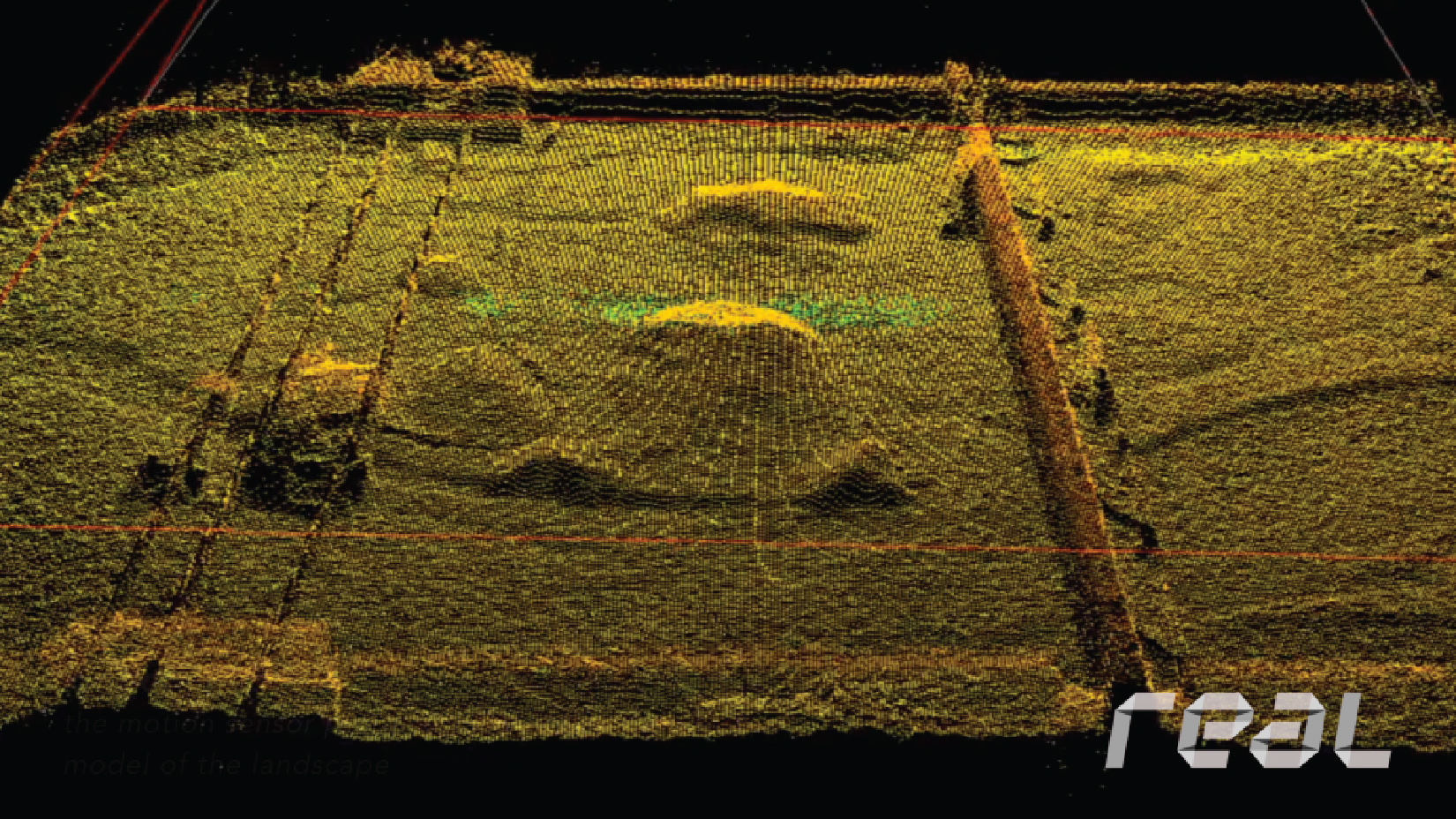
extracted realtime surfaces and countours
extracted realtime surfaces and countours

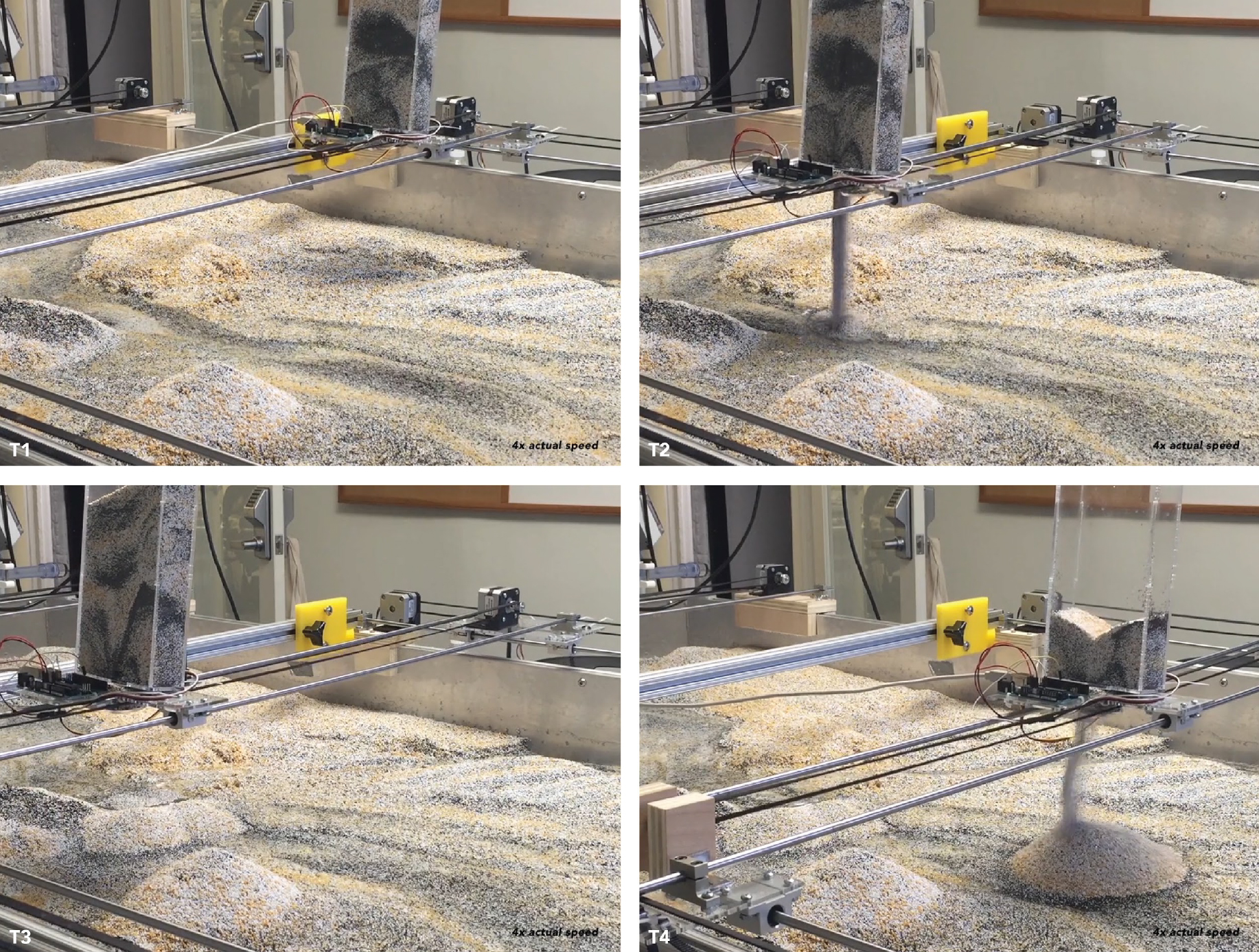
Depositor, scanning the topographic features of the landscape and depositing sediments to re-route the flow of water
Depositor, scanning the topographic features of the landscape and depositing sediments to re-route the flow of water

An Independent Study by Leif Estrada, registered as ADV-9201-04 for the Fall 2015 term at the Harvard Graduate School of Design. Under the advisement of Bradley Cantrell | MLA Program Director + Associate Professor in Landscape Architectural Technology, Harvard University - Graduate School of Design, with the additional support of Justine Holzman | Adjunct Assistant Professor, University of Tennessee - Knoxville. A probe in relation to my graduate thesis in the MLA program at Harvard University-Graduate School of Design -- Rejection of the dichotomous image created by ‘the manmade’ and ‘the idealized’ untouched image of Nature was brought on by technological advancements humans developed for modifying all known Natures. Such production brings upon an anxiety as to what was once natural. Through our ability to create and conceptualize hybrids of biotic and abiotic systems, we have also facilitated the evolution and image of novel ecologies. Furthermore, design is consistently introduced to “tame” newly-ostracized biologic systems to human will. To legitimize uncanny creations, humans find and extract any economic and practical capacities. However, despite levels of human control, there is always a moment in which a system will fail. Today’s systemic failures, re-situate novel ecologies in the contemporary realm of “uncontrolled environments.” Can responsive systems learn from the living landscapes? Can sentient machines mitigate foreseeable systemic failures, as well as facilitate the emergence of novel ecologies? This thesis incorporates the design of a machine that will learn from initial site conditions, but also from modifications it will produce independently. The landscape machine will eventually become sentient, freeing itself from man’s control. Autonomously, it will act as a non-subjective author—constantly altering and modifying landscapes, privileging the evolution of ecology over static constructions. Future landscape designers will be creators of autonomous, human-value reinforcing machine because, as individuals, we have lost touch with our ability to negotiate the complexities of our relationships with non-human actors throughout all of earth’s landscapes. A shift in what has become the accepted norm concerning ecology is necessarily upon us.

'Cyborg Ecologies' is a current research project at the Responsive Environments and Artifacts Lab (REAL) at the Harvard Graduate School of Design. The project explores the interface between dynamic landscape systems and responsive technologies including sensing, monitoring, and actuation. The research expands the application of responsive technologies to investigate indeterminacy and dynamics in contemporary landscape architecture. The lab is developing models that can be accessed by designers which focus on the realtime manipulation of landscape systems. The Cyborg Ecologies project specifically attempts to develop the tools and methods that would enable the fabrication of these dynamic and complex landscapes. The profession of landscape architecture inherently engages a dynamic, biological medium through the manipulation of soils, vegetation, and atmosphere. The implementation of responsive technologies requires frameworks that not only engage landscape at the scale of object but also acknowledge the territory and interconnections of ecological systems. These frameworks are not imagined as overarching methods of control but instead express a relationship between sensing and processing that is predicated on learning. As a methodology, the project directly addresses the need to develop a form of “distanced authorship,” (Charles Waldheim, “Strategies of Indeterminacy in Recent Landscape Practice,” Public 33 (Spring 2006): 80-86.) that deconstructs methods which activate natural processes such as succession, accretion and remediation as the agents of change in the environment. This approach privileges the dynamics of ecology over static constructions as a method to design landscape systems. 'Cyborg Ecologies' postulates a fabrication that engages dynamic landscapes, not as a generator of architectural form but as a fluid medium. The project regards fabrication as a process of addition and subtraction that is driven by contextual cues. An agent unto itself, it creates a relationship with the environment, evolving its operating logics as information is digested. While the concepts of customization and complexity are present, the project extends a line of research that assumes the machine (fabricator) is continually tuned and the resultant “form” is a product of this tuning. This mode of inquiry is complemented by computational methods that sense and engage real-time conditions through representations that more accurately reflect the dynamics involved in the professions of architecture, landscape architecture, and urban design. As a method of fabrication, the system proposes to utilize the entropy of ecological systems to construct incrementally evolving forms that are the product of coordinated curation and choreography. Video, Edited by Leif Estrada
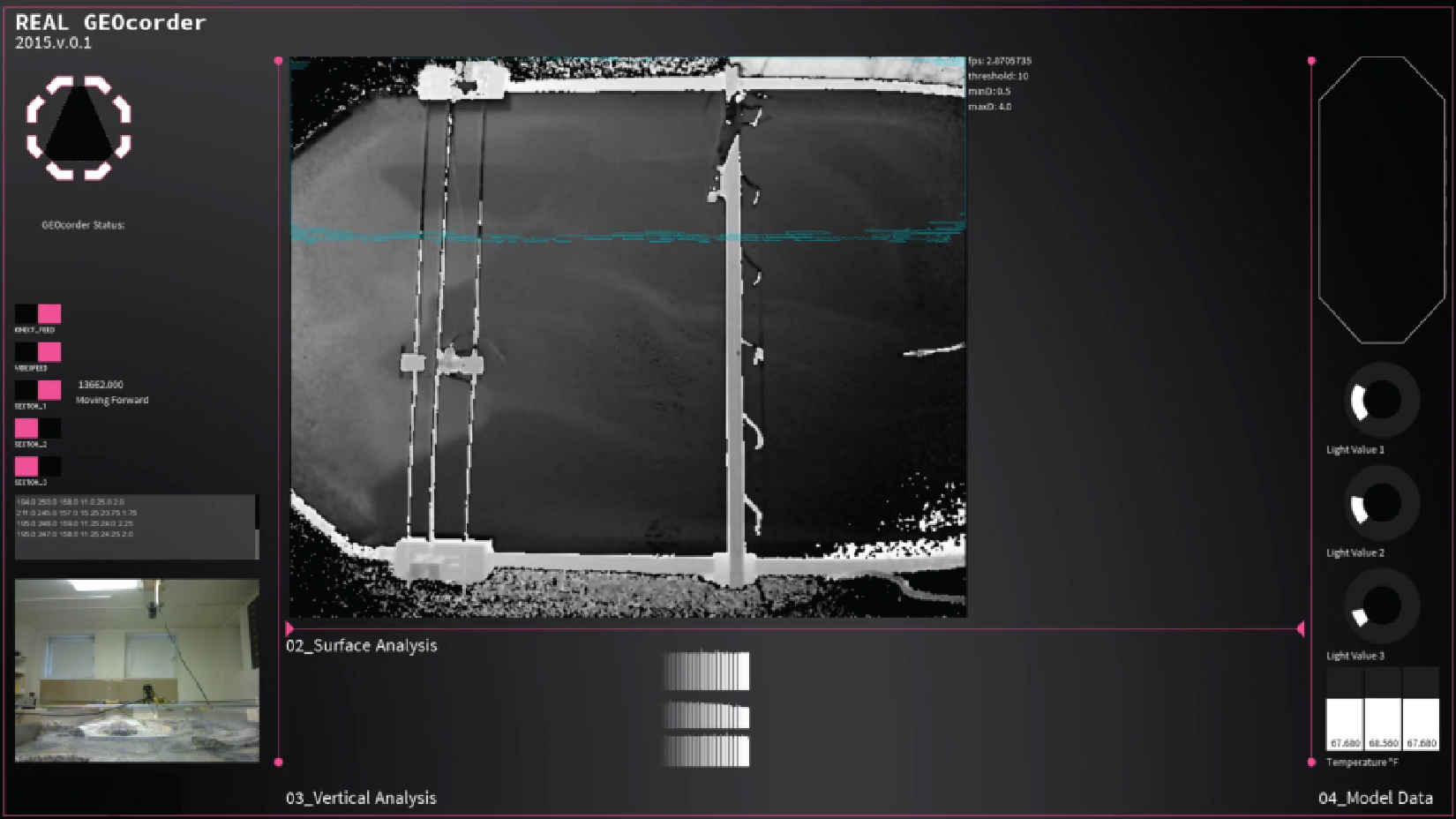
Processing Interface

Processing Interface

scanned 3D Point Cloud

scanned 3D Point Cloud

On-going Research, in collaboration with Bradley Cantrell  |  Summer 2015, Fall 2015, Spring 2016, FALL 2016

Siteless

Visualizations produced for Responsive Environments and Artifacts Lab (REAL at Harvard GSD), ADV-920153: Synthetic Natures: Towards an Alternative Understanding of the ‘Natural’ (Independent Study) and SCI-6246: Cyborgs Coasts: Responsive Hydrologies.

A probe in relation to my graduate thesis in the MLA program at Harvard University-Graduate School of Design
--

Rejection of the dichotomous image created by ‘the manmade’ and ‘the idealized’ untouched image of Nature was brought on by technological advancements humans developed for modifying all known Natures.

Such production brings upon an anxiety as to what was once natural. Through our ability to create and conceptualize hybrids of biotic and abiotic systems, we have also facilitated the evolution and image of novel ecologies. Furthermore, design is consistently introduced to “tame” newly-ostracized biologic systems to human will. To legitimize uncanny creations, humans find and extract any economic and practical capacities. However, despite levels of human control, there is always a moment in which a system will fail.

Today’s systemic failures, re-situate novel ecologies in the contemporary realm of “uncontrolled environments.”

Can responsive systems learn from the living landscapes? Can sentient machines mitigate foreseeable systemic failures, as well as facilitate the emergence of novel ecologies?

This thesis incorporates the design of a machine that will learn from initial site conditions, but also from modifications it will produce independently. The landscape machine will eventually become sentient, freeing itself from man’s control. Autonomously, it will act as a non-subjective author—constantly altering and modifying landscapes, privileging the evolution of ecology over static constructions. Future landscape designers will be creators of autonomous, human-value reinforcing machine because, as individuals, we have lost touch with our ability to negotiate the complexities of our relationships with non-human actors throughout all of earth’s landscapes.

A shift in what has become the accepted norm concerning ecology is necessarily upon us.

Processing Diagram (Feedback Loop)

Summer 2015 initial lab set up

Summer 2015 initial lab set up